
Prototyping solutions · September 16, 2021
LPKF PCB prototyping solutions take a leap forward
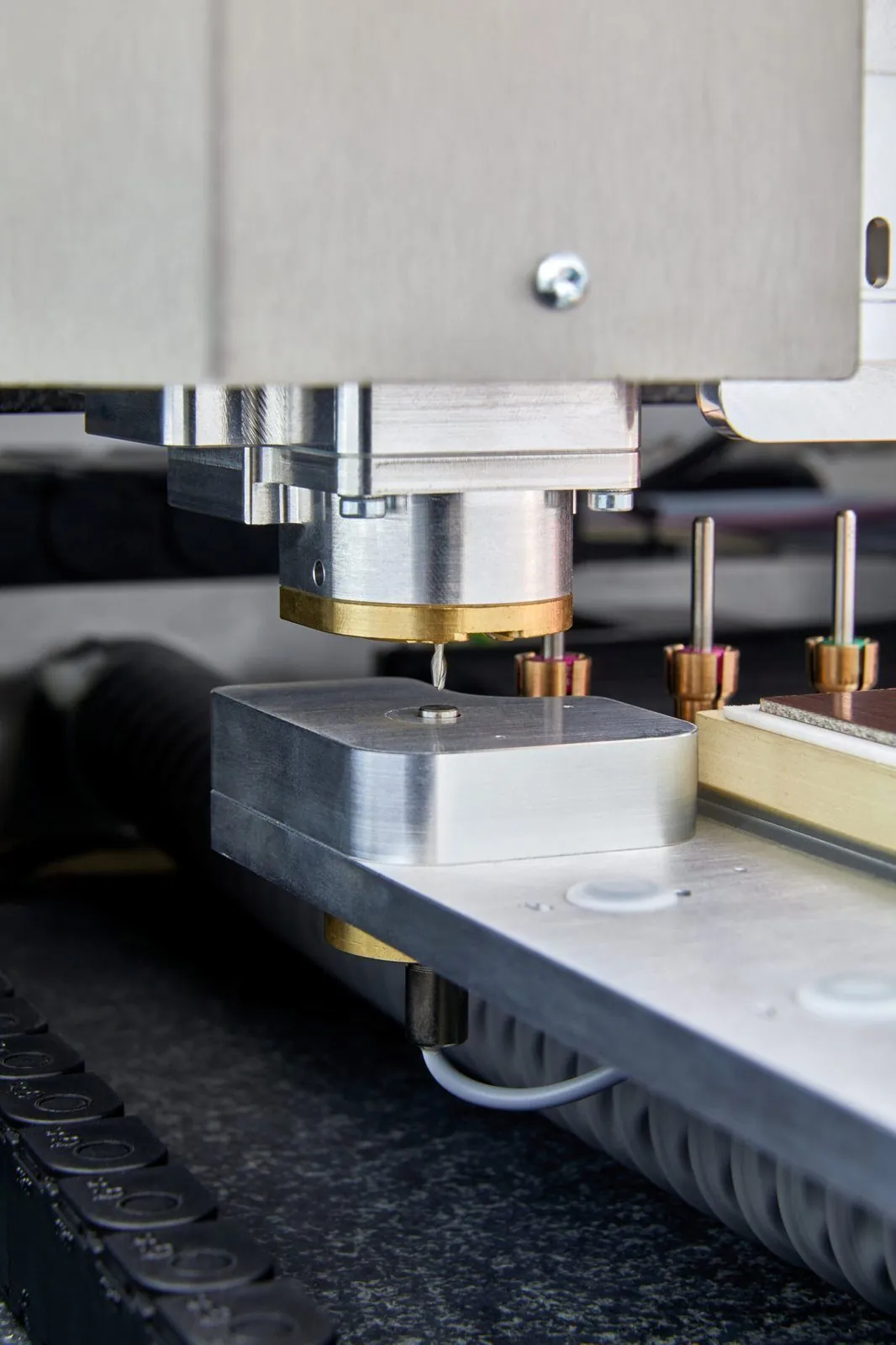
Overcoming difficulties quickly and opening up new possibilities: that is the hallmark of quality engineering. The latest LPKF solutions provide the right tool for this challenge, especially where independence in development, iteration testing and advanced research has become essential.
Time to market keeps shrinking, even as subcontracting lead times grow longer.
ProtoMat: automated mechanical structuring
LPKF ProtoMat circuit board plotters are now highly automated and more precise than ever. They mill tracks down to 100 µm in minutes, with very little user intervention, leaving the user free to focus on other tasks. New features include:
- automatic milling depth calibration;
- automatic tool change, monitored by sensor and camera;
- precise job alignment thanks to a high-resolution camera that detects fiducials.
For limited spaces, the entry-level ProtoMat E44 offers the same alignment precision and high-quality structuring.
ProtoLaser: direct laser structuring
LPKF ProtoLaser systems routinely produce 25 µm tracks and spacing, and the picosecond-source ProtoLaser R4 goes even further. They easily process sensitive and demanding substrates: flexible circuits, ceramics, piezoceramics and microwave laminates. The performance of finished boards is virtually identical to simulations, making these machines ideal for prototyping as well as small and medium series.
The patented Hatch and Delamination process, available on every ProtoLaser, removes metal from laminated surfaces while limiting thermal effects. The most advanced sources, 355 nm UV on the U4 and picosecond on the R4, enable direct ablation of thin and thick films as well as depth-controlled structuring of ceramics, plastics or PTFE.
Software that guides the user
LPKF CircuitPro software guides circuit production, with no chemicals. Speed, pulse frequency, repetitions, power: parameters are easily adjusted for new materials and saved in the library, alongside the factory settings (FR4, PTFE laminates, polyimide cutting, solder resist removal, ceramics).
The latest ProtoMat and ProtoLaser systems allow several iterations in less time than it takes to prepare and send a file to a service provider.
Bringing PCB prototyping in-house is often a necessity, whether to secure public contracts or to meet tight deadlines.
